Digital Playbill
Beautiful Human Lies: Chapter 4
Explore the Playbill
About the Show
A new, evening-length solo dance performance conjures a dissonant dialogue around identity, transformation, and privilege.
In 1999, rising hip-hop artist Rennie Harris created a 7-minute solo dance for Megan Bridge’s student thesis concert at SUNY Purchase. A mashup of street dance and modern dance, including a recorded conversation between the two artists, the work had its professional debut in 2000’s Philadelphia Fringe Festival.
Using the original solo as a seed, Beautiful Human Lies: Chapter 4 takes one white woman’s story and embeds it in layers of media images, unfolding a spectacle that lives in the tension between personal and community healing and a violent, oppressive culture.
This project explores the many ways that artistic collaboration can profoundly mark the passage of time, and how we break and remake ourselves to cobble together a coherent self.
Program Essay by Embedded Scholar & Writer, Brenda Dixon Gottschild
The poet and seer, Jelaluddin Rumi, admonishes us to
BISMILLAH your old self
to find your real name
For the moment, let’s translate that to mean “be grateful for what you’ve done, now move on to who you are.”
Both Megan Bridge and Rennie Harris have shown up, paid their dues, done the work and racked up intimidating lists of credits: check out their multiple online references and respective websites (www.rhpm.org; www.thefidget.org/megan-bridge). Still, they keep searching, stretching, moving their practice as they evolve and mature. Those interested in neat categories can say that they belong in discrete sub-realms of dance culture.
Bridge was raised in a (white) Philadelphia suburb, began studying ballet at age 3, and as a teenager started coming to the city to study modern dance at a local studio. She continued studying ballet throughout her conservatory years at SUNY Purchase and into her thirties. Now, aged 46 and having danced professionally for two-plus decades, she’s at a turning point.
Harris’s background rests firmly in Philly-Style urban street dance. He comes from a hardscrabble, Black working-class neighborhood and learned to dance and compete individually or with teams by performing in public spaces where the practice, itself, was the teacher. He’s well-versed in many styles of street dance and is quick to explain that hip hop is not breakdance, and both come under the larger rubric, street dance. He is 61 years old. Working with Bridge on this solo is a new milestone in Harris’s nearly 5-decade career.
This unlikely pairing’s first coming together was in 1999 when Bridge, graduating from SUNY Purchase, asked emerging artist Harris to choreograph a (7-minute) solo for her thesis concert. This short version premiered at the 2000 Philadelphia Fringe Festival. Twenty-five years later, at Bridge’s request, that piece has generated the evening-length work premiering at Fringe 2025.
So, why do they meet again, here and now? Bismillah to both artists turning a corner on work, on self, on transgressing boundaries.
This is a first for Harris—esteemed for his group works featuring male artists, largely Black and brown—to choreograph an evening-length solo for a white woman who lives outside the realm of street dance but has reached that point in her career where she’s ready to step off the cliff, to learn to fly.
James Baldwin—once revered, then derided, and rightfully again revered—said this, in one of his final interviews:
All art is a kind of confession, more or less oblique. All artists, if they are to survive, are forced, at last, to tell the whole story, to vomit the anguish up. . . . if you can examine and face your life, you can discover the terms with which you are connected to other lives, and they can discover, too, the terms with which they are connected to other people.
In 1992 for Philly’s Mime Now Festival, Harris choreographed and danced Endangered Species, a solo that revealed an epic struggle between vulnerability and strength. Bridge’s performance, created by Harris for the here and now, is haunted by that earlier work. Ghosts. Seekers. Seekings. Similar, but different. People connected to other people. Harris and Bridge, bridged!
Seasoned by the shifting landscapes of their lives, this new solo is a mature questioning of the American dancing body and its dreadlocked relationships, tentacled round Black/white, male/female, social/somatic binaries. The agon is heightened, here: a Black man’s imprimatur on an outlier white woman’s body.
These are facts. See for yourself how it all plays out.
Extra Events:
Sept 6th at 6pm:
Pre-Show Talk
with Brenda Dixon Gottschild and Rennie Harris
Sept 8th, after the show:
Join writers from thINKingDANCE, Philadelphia’s independent dance criticism journal, after the performance for “Write Back Atcha!” a post-show talk-back and mini-writing workshop. Our facilitators will guide you through a discussion of the performance and exploration of language you can use to describe dance. You’ll have an opportunity to see your words published in a crowd-sourced review on www.thinkingdance.net
Creative Team
Choreographed and Directed by Rennie Harris
Performed by Megan Bridge
Video Design by Julie Ballard
Lighting Design by Julie Ballard
Embedded Scholar & Writer: Brenda Dixon Gottschild
Sound Credits:
Audio editing by Peter Price
Beautiful Human Lies (2000) mixed and edited by Darrin Ross
Morphic Resonance original music by Peter Price
Sound: Finn Powers
Bios

Lorenzo “Rennie” Harris is a leading ambassador for Hip-hop. Harris grew up entrenched in Hip-hop culture and was immersed in all its forms — music, dance, language. Throughout his career, he has embraced the culture and sought to honor its legacy. He believes Hip-hop and Street Dance is the purest form of movement in that it honors both its heritage from African and African American-Latino culture. His life has been devoted to bringing Hip-hop and Street dance to all people. Harris’s artistic philosophy reflects a deeper understanding of people that extends beyond racial, religious, and economic boundaries. He believes that Hip-hop, because of its cross-racial and transnational popularity, can help bridge these divisions. Harris’s work encompasses the diverse and rich traditions of the past, while simultaneously presenting the voice of a new generation through its ever-evolving interpretations of dance.
Harris is well versed in the vernacular of what he calls Hip-hop “proper” as well as the various techniques of B-boy (often mistakenly called “breakdancing”), house, GQ and other styles that have emerged spontaneously from the urban, inner cities of America like the North Philadelphia community in which he was raised. Noted for coining the term “Street Dance Theater,” Harris has brought “social” dances to the “concert” stage, creating a cohesive dance style that finds a cogent voice in the theater. He is a powerful spokesperson for the significance of “street” origins in any dance style. Intrigued by the universality of Hip-hop, he seeks inspiration from other forms and performance art. Harris has developed works that challenge his audiences’ expectations about Hip-hop and street dance. Much of Harris’s work has explored his personal experiences as an African- American male growing up in North Philadelphia. However, Harris returns here to the ideas of “Puremovement” and seeks to challenge those who see Hip-hop/Street Dance as a purely male form of expression.
Harris is also the founder of the annual street festival Illadelph Legends which he started in 1997/98. Every year since, guest artists and students have been coming from around the world to Philadelphia for a weekend of classes, lecture demonstrations, panel discussions, jam sessions, and performances. The guest artists and teachers are seminal performers in the field of Hip-hop and Street dance. The original teachers included the creator of Campbell Locking, Don “Campbell Lock” Campbell, the creator of Fresno Boogaloo & Popping, Boogaloo Sam, and his group the Electric Boogaloos, and B-boy pioneers Crazy Legs of the infamous Rock Steady Crew and Lil Lep of New York City Breakers, just to name a few.
To date Harris has been awarded 3 Bessie Awards, 4 Alvin Ailey Black Choreographers Award for Rome & Jewels, an Ethnic Dance Award, the Herb Alpert Award in the Arts for choreography. He has also been nominated for a Laurence Olivier Award (UK) for Rome & Jewels and nominated again for best choreography in 2006 for Love Stories (Alvin Ailey Dance Theater). He’s received a Guggenheim Fellowship, PEW Fellowship, USA Artist of the Year Fellowship as well as the coveted “Philadelphia Rocky” Award, and Governor’s Artist of the year to name just a few. He was also voted a Creative Ambassador of Philadelphia. At the turn of the century, Harris – alongside Princess Grace Kelly and Dr. Julius Erving – was voted one of the most influential people in the last one hundred years of Philadelphia history and has been compared to twentieth-century legends such as Basquiat, Alvin Ailey, and Bob Fosse. Noted for coining the terms Street Dance Theater and Hip-hop Concert dance Harris has also received an honorary doctorate from Bates College (Lewiston, Maine) in 2010 and another from Columbia College (Chicago, IL) in 2012. The first choreographer (street dancer) to set a sixty-minute work on Alvin American Dance Theater Harris received a Dance Magazines Legend Award, Palm Desert Festivals LifeTime Achievement Award and is the recent recipient of the Doris Duke Artist Award.
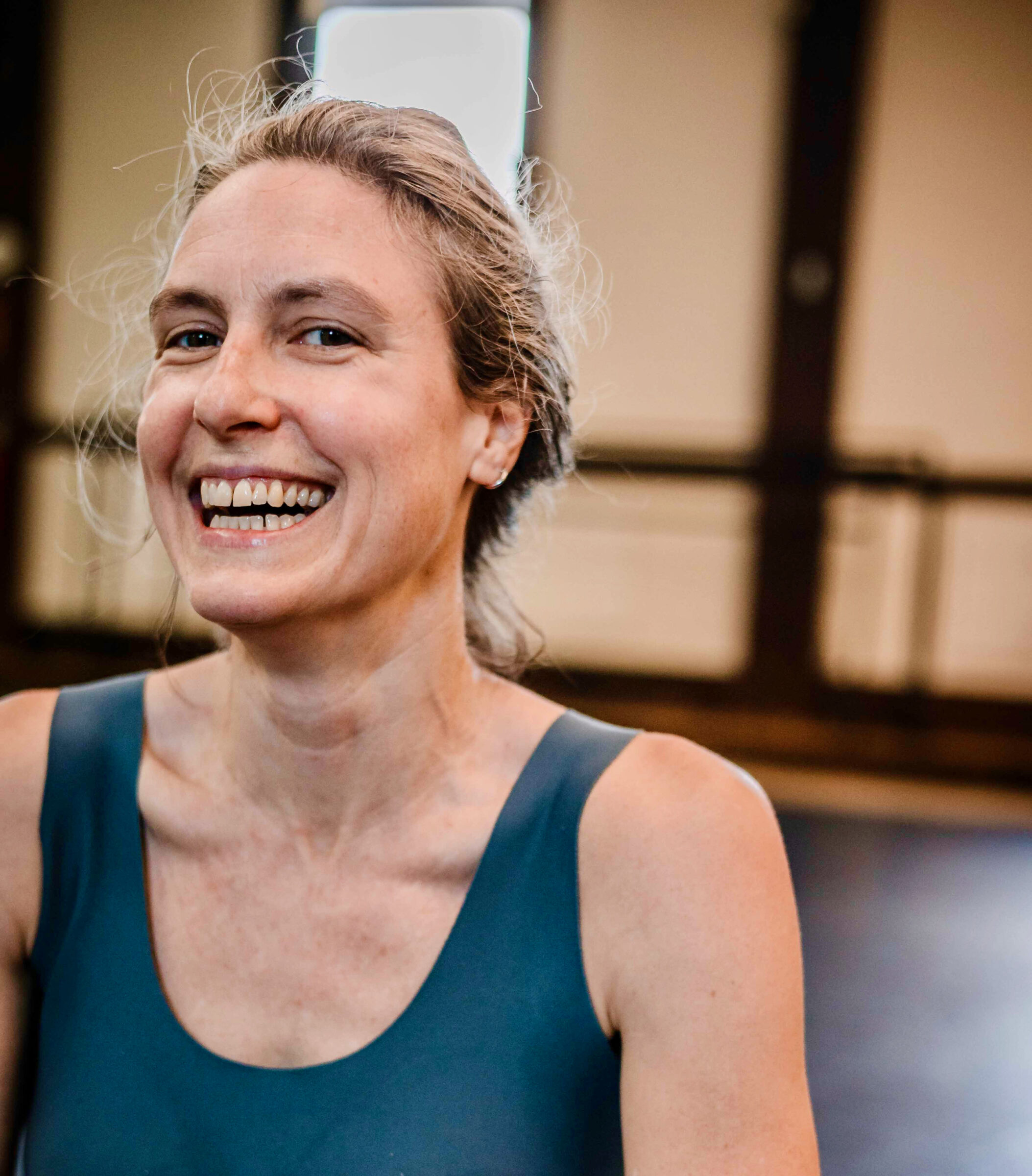
Megan Bridge is a performer, choreographer, dance scholar, educator and writer based in Philadelphia, USA. Her most recent group choreographies have premiered at The Philadelphia Museum of Art (The Bach Cello Suites Project, 2023, ‘24, & ‘25, and enclosure…wellspring…retreat, 2019), Chimaera Gallery (guns and Self Portrait, 2025) and FringeArts (Sp3, 2018) in Philadelphia, and her solo performance works have taken her on tour in Austria, Bulgaria, Colombia, France, Germany, Georgia, Macedonia, Poland, South Africa, & Switzerland. In 2013 she was named “Best of Philly” for stage performance by Philadelphia Magazine. With composer and musicologist Peter Price, she is the co-director of Fidget, an experimental performance group & warehouse art-space in Kensington, North Philadelphia. With artist Tyler Kline, she is one-half of the collaboration Vampyre Squid that manifests as an experimental body movement research and performance lab.
Bridge holds a BFA in dance from SUNY Purchase, and an MFA in dance from Temple University. She currently teaches in the dance department at Temple University in Philadelphia, and has taught throughout the world in Poland, France, Bulgaria, Macedonia, and in Tbilisi, Georgia. She has taught week-long intensive workshops at FringeArts in 2024 & 2025, and she is a certified Group Motion Workshop facilitator. Her teaching practice is focused on somatics, improvisation, and collective play. She loves bringing philosophical inquiry into the studio, and recently her ideas have been in conversation with philosopher Erin Manning, affect theory, concepts of presence, and altered states of consciousness. She has studied with Steve Paxton, Lisa Nelson, Deborah Hay, Merian Soto, Manfred Fischbeck, Brigitta Herrmann, Rennie Harris, André Lepecki, and Neil Greenberg.
Bridge has performed in the work of choreographers Jerome Bel, Lucinda Childs, David Gordon, Susan Rethorst, Willi Dorner, and with Group Motion Dance Company and Headlong Dance Theater in Philadelphia. In 2020 she staged Jérôme Bel’s work Gala at the Miami Institute of Contemporary Art, and in 2022 she performed the US premiere of Bel’s 2021 work, Jérôme Bel. In 2016 she was rehearsal assistant to David Gordon for a project in Philadelphia, and from 2011-2013 she worked on a reconstruction of Lucinda Childs’ early minimalist works. She has received funding support from USArtists International, The Network of Ensemble Theaters, Foundation for Contemporary Arts, American Dance Abroad, and more.
She has published numerous articles in Dance Magazine, Pointe Magazine, The Dance Chronicle, Philly Artblog, and at thINKingDANCE.net, where she also served as an editor and as Executive Director from 2014-2016.
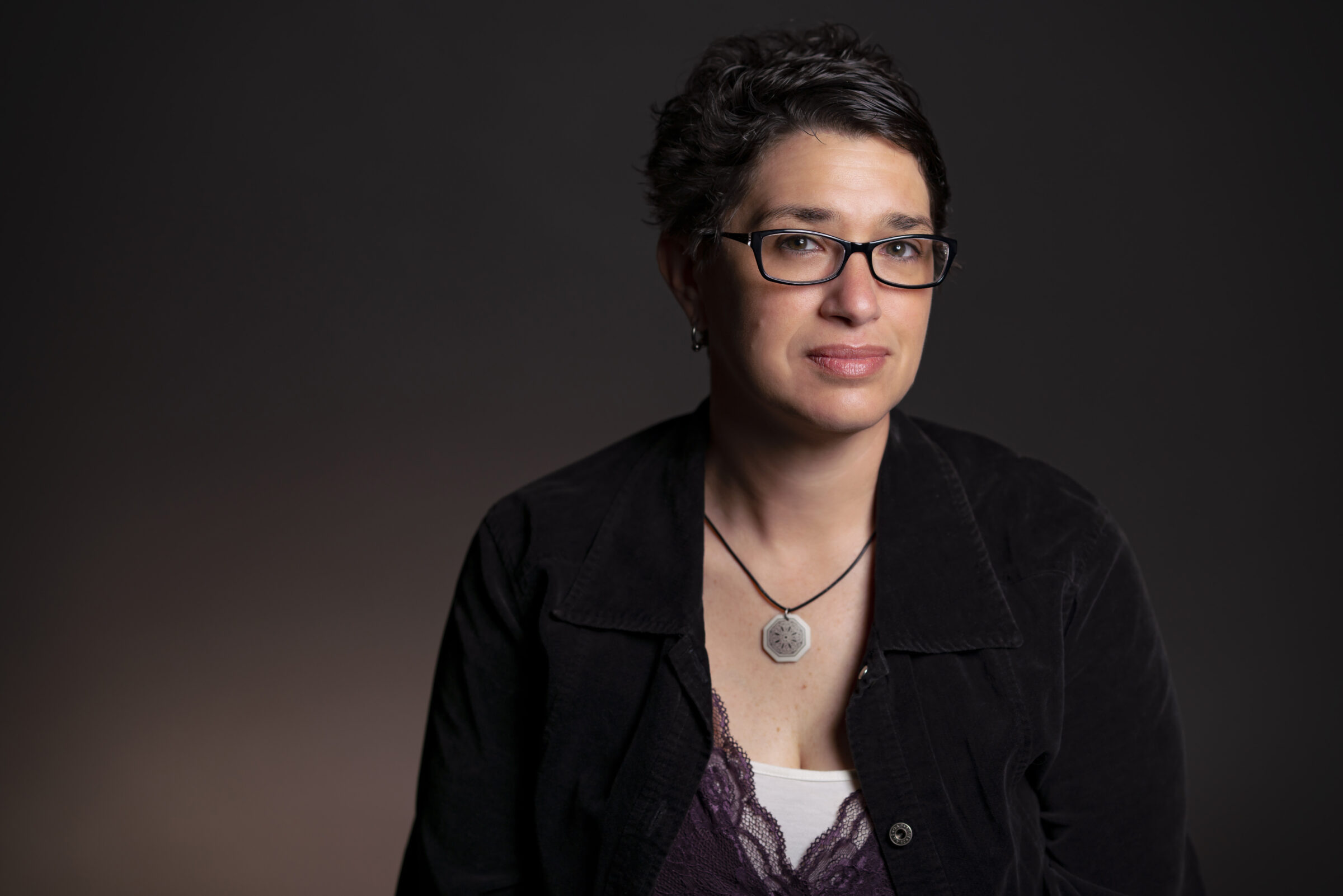
Julie E. Ballard, USA829, is a professional lighting designer, ETCP-certified electrician, and theatrical technician. She is affiliated with IATSE Local 2 and the Actors’ Equity Association. Additionally, Ms. Ballard is the owner/operator of OverlapLighting Productions, LLC, a freelance production company specializing in lighting design and production/stage management. She has designed for the Rennie Harris PureMovement, Pacific Northwest Ballet, Ballet West, and Hubbard Street Dance Chicago.
She has freelanced for over two decades in and around the Midwest, touring regionally, nationally, and internationally with Hubbard Street, Pilobolus, Ladies of Hip Hop, The Seldoms, and David Dorfman Dance, among others. Theatre audiences have seen her designs in the U.S., across Europe, Siberia, and South Africa. Ms. Ballard holds degrees in Theater (BA, 1999) and Lighting Design (MFA, 2004) from Kent State University and the University of Florida, respectively. Her digital footprint can be found at overlaplighting.com
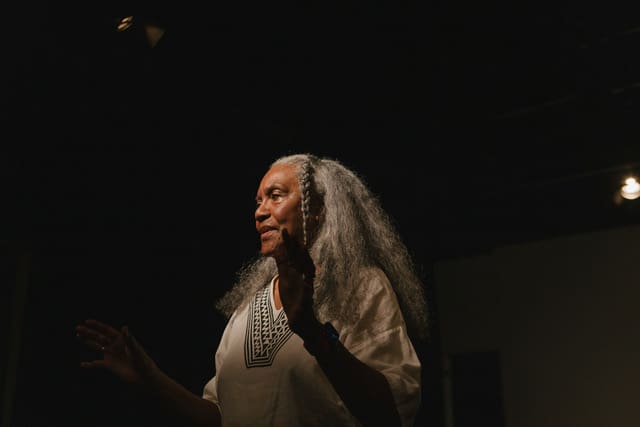
Brenda Dixon Gottschild is the author of Digging the Africanist Presence in American Performance: Dance and Other Contexts; Waltzing in the Dark: African American Vaudeville and Race Politics in the Swing Era (winner of the 2001 Congress on Research in Dance Award for Outstanding Scholarly Dance Publication); The Black Dancing Body–A Geography from Coon to Cool (winner, 2004 de la Torre Bueno prize for scholarly excellence in dance publication); and Joan Myers Brown and The Audacious Hope of the Black Ballerina-A Biohistory of American Performance.
Additional honors include the Congress on Research in Dance Award for Outstanding Leadership in Dance Research (2008); a Leeway Foundation Transformation Grant (2009); the International Association for Blacks in Dance Outstanding Scholar Award (2013); the Pennsylvania Legislative Black Caucus Civil Rights Award (2016); a Pew Fellowship in the Arts (2017); the Dance Magazine Award (2022); the New York University Hemispheric Center for American Politics and Performance 2022 Mellon Foundation Artist in Residency Award; and the 2022 Dance History Scholars Scholarly Achievement Award.
A self-described anti-racist cultural worker utilizing dance as her medium, she is a freelance writer, consultant, performer, and lecturer; a former consultant and writer for Dance Magazine; and Professor Emerita of dance studies, Temple University. As an artist-scholar she coined the phrase, “choreography for the page,” to describe her embodied, subjunctive approach to research writing.
Nationwide and abroad she curates post-performance reflexive dialogues, writes critical performance essays, performs self-created solos, and collaborates with her husband, choreographer/dancer Hellmut Gottschild, in a genre they developed and titled “movement theater discourse.” www.bdixongottschild.com
Supporters
SUPPORT
Beautiful Human Lies: Chapter 4 is a project of Fidget, a 501c3 non-profit organization based in Philadelphia, and is made possible by the generosity of Fidget’s donors, including seed money from Sallie Findlay and sustaining support from project ambassadors Chris Deephouse and Donna Hunt, and Joy McGinnis. The project has also been generously supported by two American Dance Asylum creative residencies at 171 Cedar Arts Center in Corning, NY. Additional project support is from University of Colorado, Boulder; Ensemble Arts Philly at The Kimmel Center; and FringeArts. Special thanks to Lois Welk, Mikaela Boone, and Nick Stuccio.
Co-producers
Judith Tannenbaum
Karol M. Wasylyshyn
Rosanne Sarkissian